
Reviewed · WHALE WATCHING IN TAHITI
4 Hours of Humpback Whale Watching in Tahiti
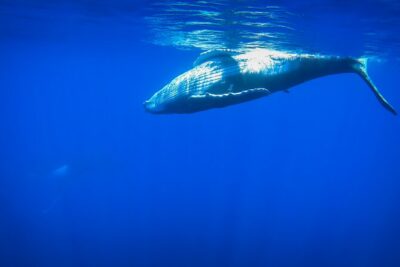
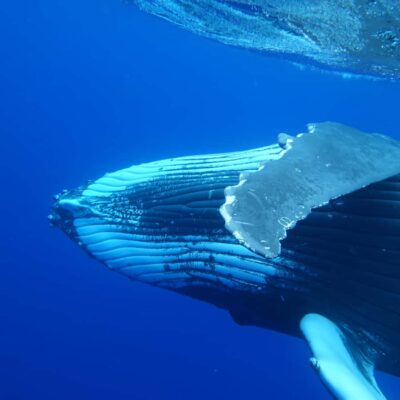
Tahiti’s humpback whales are the main event here, but the hydrophone adds a special layer: even when a whale is below the surface, you may hear its song through the boat. The trip begins with boat-based watching, and only the guide decides if entering the water is safe and respectful.
I like the small group of no more than 12 people and the serious attention to animal welfare. I also like that naturalist guides such as Luo, Julien, and Bastien explain whale behavior instead of treating the outing as a simple race to take photographs. The tradeoff is clear: sightings and snorkeling are never guaranteed, and rough water or nearby predators can keep you on board for the full four hours.
In This Review
- Key points to know before you book
- Four hours in Tahiti’s whale waters
- What the naturalist guides add
- Watching from the boat before entering the water
- Snorkeling depends on the whales, not the timetable
- The value of a small group and spacious boat
- How good is the $127.54 price?
- Who will enjoy this most?
- Timing, meeting point, and booking details
- What can make the day memorable
- Should you book Tahiti Ocean Explorer?
- FAQ
- How long is the whale-watching experience?
- Where does the tour start?
- Is snorkeling with the whales guaranteed?
- Do I need snorkeling experience?
- Can children join the tour?
- What animals might I see besides humpback whales?
- What happens if the weather is poor?
Key points to know before you book
- Whale song by hydrophone: Listen for humpback calls beneath the boat, even when visibility is limited.
- Boat watching comes first: You watch from the boat before any decision is made about entering the water.
- A guide controls every launch: Whale behavior and sea conditions determine if snorkeling is allowed.
- Snorkeling skill is required: Children under 10 can join, but their whale observation is by boat only.
- Small-group setting: The boat carries a maximum of 12 people, giving the guides room to explain what you see.
- Nature sets the schedule: Dolphins, turtles, and other cetaceans are possible, but no animal encounter is promised.
Four hours in Tahiti’s whale waters
This is a focused ocean outing from Puna’auia, on Tahiti’s western side. You meet at the location marked C97M+HW Puna’auia, then return to the same place after roughly four hours.
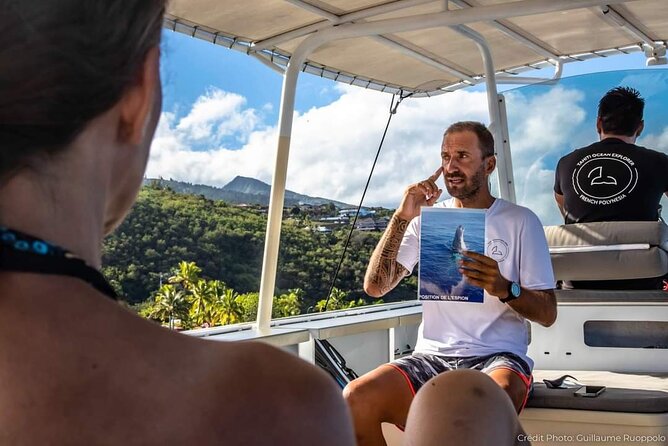
The trip starts with a full briefing about humpback whales, their behavior, and the rules for approaching them. That briefing matters. Whales are not a stage show, and the right distance can change from one moment to the next. The guide is the only person authorized to decide how close the boat goes and if anyone enters the sea.
You then search the open water. The exact route and timing depend on where whales are found, how active they are, and what the sea is doing that day. Your guide watches for signs such as blows, movement at the surface, tails, and groups traveling together.
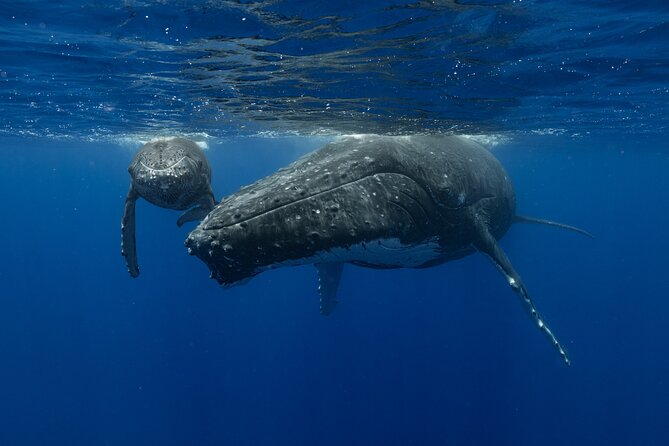
The strongest sightings can be thrilling. One outing produced a mother and calf, while another ended with a close encounter after time spent looking. But the boat may also find only distant blows or a tail before the whales disappear. That is part of the bargain with wild animals, not a flaw that can be fixed by a tighter schedule.
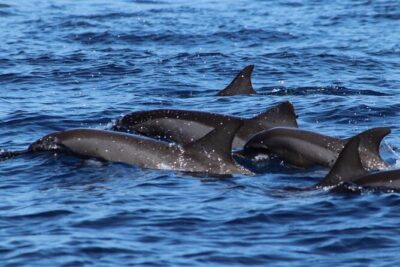
The tour also leaves room for dolphins, sea turtles, and other cetaceans. These are possible extras, not planned stops. You should think of the itinerary as a search on the ocean, not a series of guaranteed viewing points.
More Whale Watching in Tahiti
- Respectful whale excursion to Tahiti in 4h30
★ 4.5 · 123 reviews - Tahiti island: Whale watching Experience
★ 4.2 · 79 reviews - Guided Small Group Whale Watching and Swim Tour Tahiti
★ 5.0 · 57 reviews
What the naturalist guides add
The people on board are central to the experience. Luo, also referred to as Lou or Lulu in the feedback, is praised for explaining whales clearly, helping with photographs, and taking time with the group. Julien and Bastien are also singled out for strong guiding, good whale-finding, and clear explanations.
The useful part is not simply knowing the name of a whale. A guide can help you understand why an animal changes direction, why the boat waits, or why a launch is stopped. That turns a quiet stretch of ocean into part of the experience rather than dead time.
The team also works with local cetacean conservation associations and marine biologists. The stated goal is to make observations useful for scientific understanding while following animal welfare rules. You will not be signing up for a research expedition, but this connection gives the trip a stronger purpose than a standard sightseeing cruise.
Expect a guide-led search rather than constant narration. The boat may go quiet when the crew is watching for a surfacing whale, then the guide may quickly explain what happened. Keep listening, since a whale can appear for only a short moment.
Watching from the boat before entering the water
The first and most reliable part of the experience is boat-based observation. The spacious boat is designed for comfort during the ocean trip, and the small capacity helps prevent the crowding common on larger whale cruises.
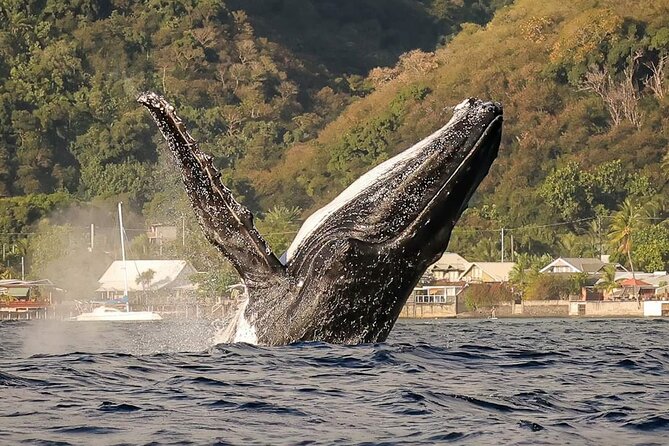
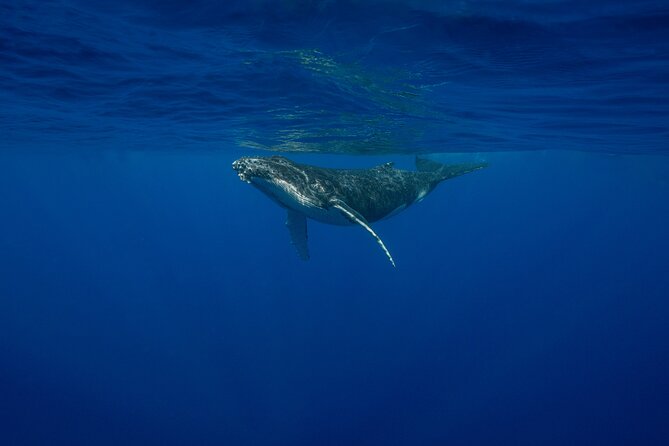
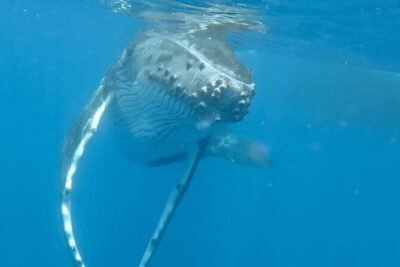
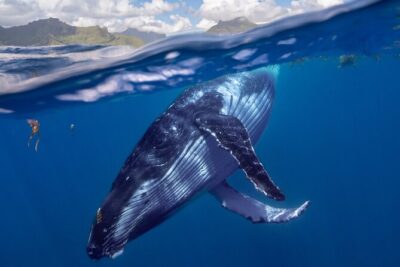
You may see a whale from a distance, watch a blow, spot a tail, or follow a mother and calf. The boat provides a stable viewing platform compared with floating in the sea, and it is the only option offered to children under 10.
The hydrophone is a particularly good feature. Humpback song is sound rather than scenery, and listening to it gives you something to experience while waiting for the next surface appearance. It also helps you appreciate that the whale’s presence does not end when it slips underwater.
The boat can still move with the sea. One disappointing outing involved choppy conditions and a long search. If you are prone to motion sickness, prepare carefully, though the supplied information does not specify what remedies or equipment are provided. The trip requires a moderate level of physical fitness, so it is not designed as a completely passive cruise.
Snorkeling depends on the whales, not the timetable
If the whales’ behavior and the sea conditions allow, the guide may offer the chance to observe them in the water. You must have snorkeling experience for this option.
That rule is important. You need to be comfortable in open water and able to follow instructions without slowing the group. Simply being able to wear a mask and breathe through a snorkel in a calm swimming pool is not the same as being ready for an ocean launch near large wild animals.
The guide makes the final decision. You cannot request a launch and expect it to happen. The animals may be moving too quickly, showing signs of discomfort, or positioned in a way that makes entering the water unsafe. Rough seas can also end the possibility.
One outing could not include a water encounter because five large predatory sharks were circling the boat. That may be frustrating after paying for the experience, but keeping everyone aboard was the correct safety choice. It also shows why the advertised snorkeling opportunity must be treated as a possibility, not a promise.
If snorkeling does happen, follow the guide’s instructions closely and expect a respectful approach rather than a guaranteed close-up. The goal is to observe without changing the whales’ behavior.
Same lagoon, a completely different day on the water:
- 5 Hours Tahiti Island Tour – West and East Coast
★ 5.0 · 1,020 reviews - Crossing Island of Tahiti 4×4 Mountain, Waterfall, River, Basins
★ 4.5 · 532 reviews - Découvrez le Mana durant la traversée de Tahiti en 4×4 Safari
★ 5.0 · 456 reviews - Moorea Street Food Tour
★ 5.0 · 410 reviews
The value of a small group and spacious boat
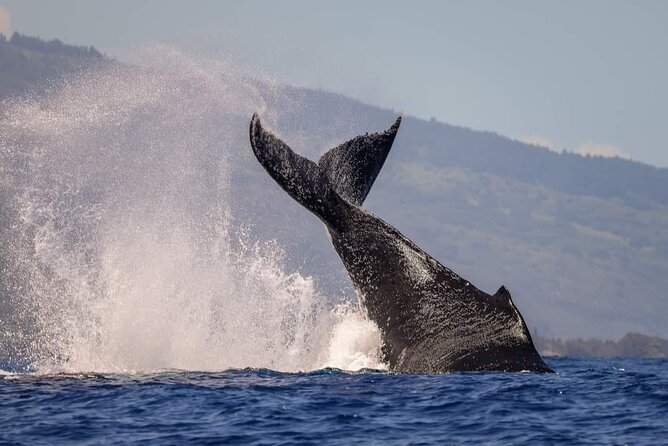
With a maximum of 12 people, this is a more personal outing than a large whale-watching vessel. You have a better chance of hearing the guide, asking questions, and getting a clear view when something surfaces.
A small group also helps the crew manage the boat around whales. Fewer people moving around means less confusion when the guide gives directions. That matters even more if a water launch becomes possible.
The spacious boat is another practical advantage. Four hours is a long time to spend at sea, especially if the water is choppy or the whales take time to locate. A comfortable boat does not guarantee calm conditions, but it makes the waiting period easier.
The small-group format can have a downside. There may be fewer other boats searching nearby, so the crew may have less immediate information about where whales are. One particularly poor outing involved finding a mother and calf only after another company shared their location. That kind of situation appears to be an occasional frustration, not the normal promise of the tour, but it is worth keeping in mind.
How good is the $127.54 price?
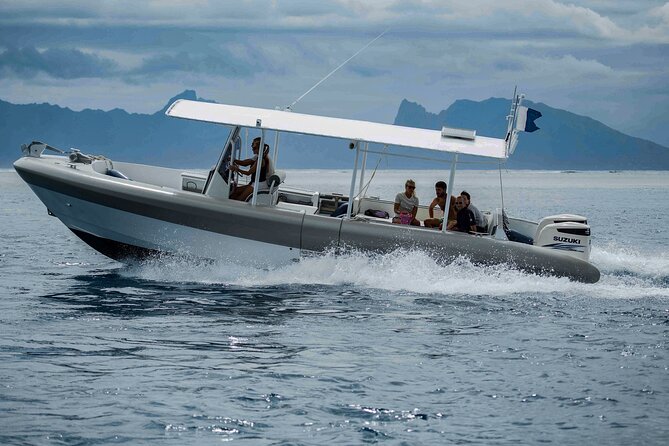
At $127.54 per person, the cost is reasonable if you value a four-hour, small-group ocean trip with trained naturalist guides and specialist equipment such as a hydrophone. You are paying for time on the water, not for a guaranteed whale performance.
The value improves if you care about the explanation behind the sighting. The guide interprets behavior, discusses the animals and their environment, and keeps the approach within local welfare rules. You also have the possibility of dolphins, turtles, or other cetaceans during the search.
The price feels less satisfying if your main goal is a guaranteed swim with whales. No operator can honestly promise that here. The whales may remain distant, the sea may be rough, or safety concerns may prevent a launch.
I would book this for the overall marine experience, with snorkeling as a bonus. If you need a predictable schedule and a guaranteed close encounter, this is not the right kind of activity.
Who will enjoy this most?
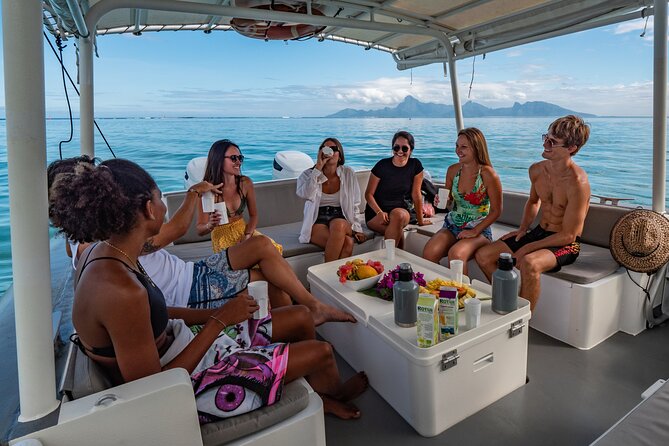
This tour suits you if you are happy to spend time looking, listening, and waiting for wild animals. It is a good match for people who want context from a naturalist guide and prefer a smaller boat to a crowded sightseeing cruise.
It also suits confident snorkelers who understand that open-water conditions and animal behavior control the day. The water option is not an activity you can add on demand.
Families can bring children under 10, but young children will observe whales only from the boat. The activity requires moderate physical fitness, so consider that before booking for anyone who has trouble with extended time at sea or boat movement.
Photographers may appreciate the guides’ help. Luo is specifically praised for assisting with photographs and making sure the group had chances to see and capture the whales. Still, keep your camera ready without letting it replace the actual encounter. A distant blow can be over before you frame it.
Timing, meeting point, and booking details
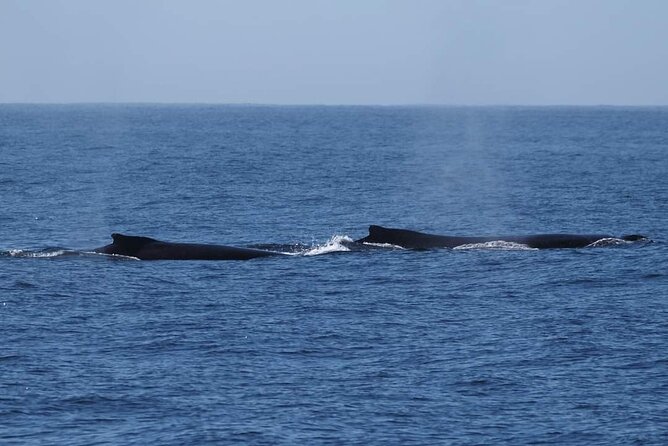
The meeting point is in Puna’auia at C97M+HW, and the tour ends back there. It is near public transportation, which is useful if you are arranging your own way to the start.
Confirmation arrives within 48 hours of booking, subject to availability. The activity is often booked about 61 days ahead, so reserve early if your Tahiti dates are fixed.
Free cancellation is available up to 24 hours before the local start time. Changes or cancellations inside that window are not accepted for a refund. Poor weather or failure to reach the minimum number of participants can cancel the trip, in which case you are offered another date or a full refund.
The mobile ticket keeps the arrival process simple. Still, give yourself enough time to reach the meeting point and prepare for a four-hour ocean outing.
What can make the day memorable
The best part may be a mother and calf surfacing together. Several outings produced that kind of sighting, and it is easy to understand why it becomes the lasting image of the day.
A close face-to-face encounter is possible, but it is not the standard to measure the tour against. You might instead see a few blows, a swimming whale, or a tail at the end of the season. Those moments can still be worthwhile if you arrive with realistic expectations.
The hydrophone can rescue a slow period. Hearing a whale beneath the boat gives you a connection to the animal even when the surface is empty. Dolphins and turtles may also appear, adding variety to the search.
The less pleasant possibilities are equally real: choppy water, a long search, distant whales, or sharks that make snorkeling unsafe. A responsible crew cannot solve those problems by taking greater risks. In this setting, a cautious decision is a sign that the guide is doing the job properly.
Should you book Tahiti Ocean Explorer?
I would book this tour if you want a small-group whale search with strong naturalist guidance, and if you accept that nature may offer a distant sighting rather than a close encounter. The hydrophone, conservation work, spacious boat, and four-hour duration give the trip substance beyond a quick ride offshore.
Book it especially if Luo, Julien, Bastien, or the wider guiding team are available for your date, since their explanations and personal help are a major part of the experience. Choose another activity if you need guaranteed snorkeling, dislike choppy water, or want a short and highly predictable excursion.
The sensible attitude is simple: hope for a mother and calf, a close sighting, or a whale song beneath the hull, but be ready to value careful searching and safe boat watching too. At $127.54, that is a fair deal for a serious wildlife outing, provided you let the whales set the terms.
FAQ
How long is the whale-watching experience?
The activity lasts approximately four hours and ends back at the meeting point in Puna’auia.
Where does the tour start?
It starts at C97M+HW Puna’auia in French Polynesia. The location is near public transportation.
Is snorkeling with the whales guaranteed?
No. The initial observation is from the boat, and entering the water depends on whale behavior and sea conditions. The naturalist guide makes the final decision.
Do I need snorkeling experience?
Yes. Snorkeling experience is mandatory for anyone taking part in the water observation option.
Can children join the tour?
Children under 10 are eligible for the child rate, but their whale observation is by boat only.
What animals might I see besides humpback whales?
You may see dolphins, other cetaceans, or sea turtles. Animal sightings are not guaranteed or systematic.
What happens if the weather is poor?
If poor weather cancels the experience, you are offered a different date or a full refund. Free cancellation is also available if you cancel at least 24 hours before the start time.
Just added around Tahiti
- Small group snorkeling (5 people max): wrecks & tropical fishes at 3:30pm★ 5.0 · 7 reviews
- Wholesale Fishing in Poti Marara at Tahiti Teahupoo Peninsula★ 5.0 · 4 reviews
- Teahupoo Olympic Wave Journey★ 5.0 · 6 reviews
- Whale Watching Activity★ 5.0 · 8 reviews
- Sunset Cruise in Tahiti★ 4.5 · 6 reviews
- Taxi Boat to Watch the Teahupoo International Surfing Competition★ 4.5 · 13 reviews
- SURF TAHITI Bites & Waves – Surf experience with every bite★ 5.0 · 7 reviews
- Private and Local Sunset Cruise in Tahiti★ 5.0 · 5 reviews
Whale Watching in Tahiti, compared.
Guided Small Group Whale Watching and Swim Tour Tahiti
Read our review →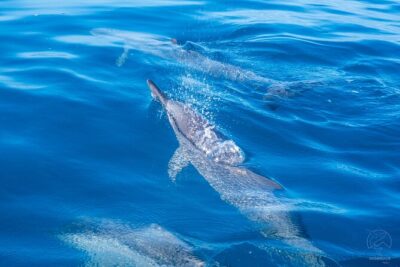
Whale watching on the preserved and quiet coast of Paea (Pk26)
Read our review →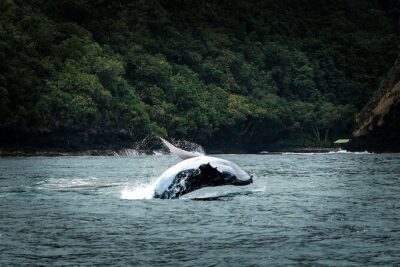
Half Day Whale Watching in a Small Shared Group
Read our review →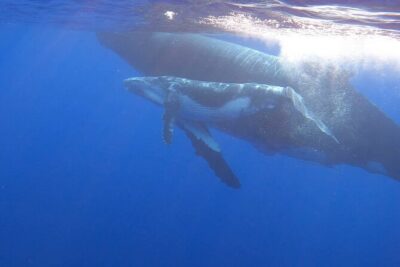
Browse the lists this tour appears in