
Reviewed · FOOD & DRINK
Moorea Street Food Tour
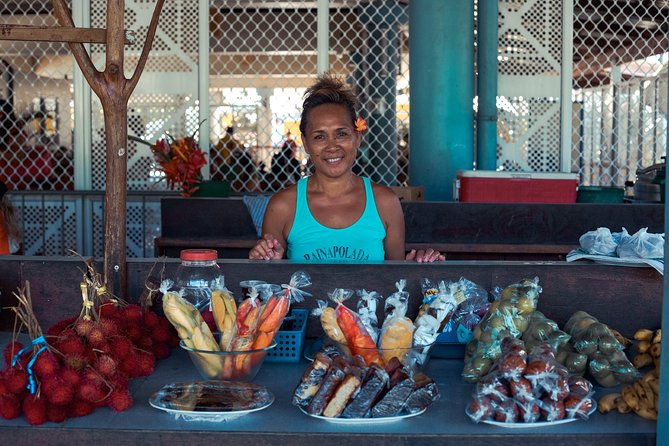
Moorea’s best food is often found in modest snack shops rather than polished resort dining rooms. This half-day tour takes you around the island’s north side with a Moorea-born guide, usually chef Heimata or Mareva, for local fruit, fish, pastries, Chinese-influenced dishes, and childhood favorites.
I like the small group, capped at eight, and the way transport lets you cover several communities with little walking. I also like the cultural context: you are not simply handed a plate, you learn how French, Chinese, and Polynesian cooking came together on the island.
The main caution is dietary choice. Vegetarian, vegan, and gluten-free options are not assured, and the alcohol information is inconsistent, so confirm what is included before booking.
In This Review
- Key points at a glance
- Why Moorea’s food is worth a morning
- The 8:30 a.m. pickup and the first taste
- Fresh fruit, mape, and the sweet side of Moorea
- Poisson cru and the island’s seafood traditions
- Chow mein, ma’a tinito, and Chinese influence
- Pies, breads, and the French thread
- Five to eight stops, with room for conversation
- Why booking early makes sense
- Is $73 a fair price?
- Dietary limits you should take seriously
- Rain, timing, and the practical details
- Who should book the Moorea Street Food Tour?
- Should you book it?
- FAQ
- Where does the Moorea Street Food Tour take place?
- What time does the tour begin?
- How long does the experience last?
- How many food tastings are included?
- What foods might I try?
- Is hotel pickup included?
- Can cruise ship passengers join the tour?
- Are vegetarian, vegan, or gluten-free options available?
- Is alcohol included in the price?
Key points at a glance
- A native chef leads the food story: Heimata grew up on Moorea and brings professional cooking experience, while Mareva also guides some departures.
- Six to eight stops mean plenty of samples: Expect anything from about 6 to 8 tastings, with past outings including roughly 13 to 15 individual bites.
- You cover much of northern Moorea: The air-conditioned 4×4, truck, or minivan makes this a sightseeing ride as well as a food tour.
- Local snack shops are the focus: Fresh pineapple, poisson cru, mape nuts, pies, breads, chow mein, and ma’a tinito may appear.
- It works well early in your stay: The guide points out places you can revisit for a proper meal later.
- The $73 price includes the tastings and transport: Hotel or port pickup is included only in specified areas.
Why Moorea’s food is worth a morning
Moorea is easy to reduce to beaches, lagoons, and mountain views. Those are good reasons to come, but food explains the island in a different way. A plate of poisson cru points to the importance of fresh fish and coconut. Chow mein reflects Chinese influence. French baking traditions appear in breads, fruit pies, and meat pies.
That mix is what gives this experience its purpose. You are sampling local food while learning why it tastes the way it does. The guide’s explanations connect everyday snacks to migration, trade, family habits, and island life without turning breakfast into a classroom lecture.
I especially like the focus on ordinary places. A snack in French Polynesia is often a casual local eatery, not a packaged tourist attraction. The tour visits vendors, stands, cafés, and small businesses, so you get a look at where residents actually buy quick meals and treats.
This is also a useful choice for anyone staying at a resort. Resort restaurants can be convenient, but they do not always show you how people eat away from the property. The tour gives you a list of foods and shops to try on your own, which can make the rest of your stay more adventurous.
A few more Papeete trips to weigh up
- Papeete Food Tour
★ 5.0 · 80 reviews - Papeete Food & City Tour
★ 5.0 · 59 reviews - Bora Bora Gourmet Odyssey – Food Tour
★ 5.0 · 15 reviews
The 8:30 a.m. pickup and the first taste
The morning begins with pickup between about 8:00 and 8:30 a.m., with the listed tour start at 8:30. Pickup is available from the Hilton, Manava, Sofitel, Kaveka Hotel, Eimeo Lodge, and nearby accommodations or vacation rentals. Port pickup and return are also listed, which helps if you arrive by ship.
The exact first stop is generally around 9:15 a.m. That timing matters. You may spend the first part of the morning collecting people and driving to the food area, but the ride gives you an early look at Moorea beyond your hotel.
The vehicle may be a 4×4 safari-style vehicle, truck, or minivan. All options are air-conditioned, and the tour involves much more driving than walking. That makes the outing manageable in casual island clothes and is helpful if you want food and sightseeing without a strenuous schedule.
Come hungry. Six to eight stops can add up quickly, especially when the portions include many small tastes. One outing included about 13 different bites, while another covered around five locations and about 15 dishes. The exact menu changes, likely according to what is available that day and what is in season.
Fresh fruit, mape, and the sweet side of Moorea
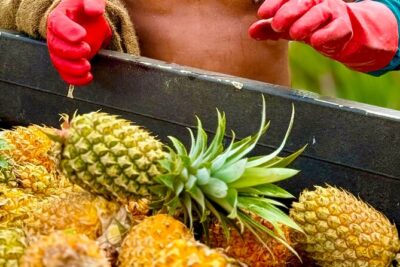
Fruit is one of the easiest ways to begin understanding Moorea’s food culture. Expect the possibility of fresh pineapple and other seasonal fruit, with chilled coconut also appearing among the samples.
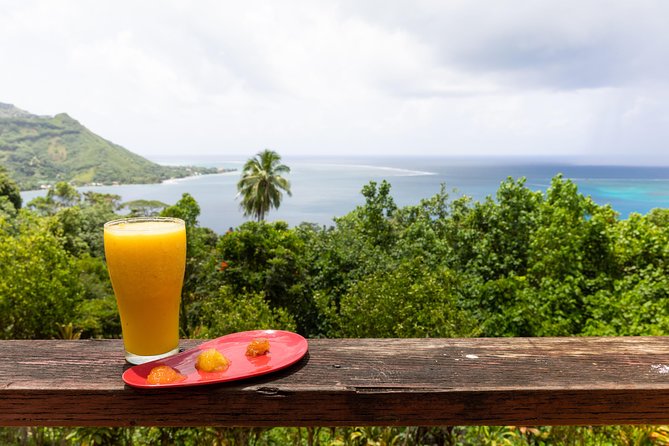
One particularly appealing combination described on the tour is fresh pineapple, roasted mape, and cold coconut cubes at a viewpoint. Mape is a Polynesian chestnut-like nut with a firm, satisfying texture when roasted. It is a simple snack, but it gives you a taste of local ingredients without heavy seasoning or elaborate preparation.
The fruit stops also balance the richer foods later. You might be moving from fish to pastry to noodles, so the fresh produce helps keep the morning from feeling like one long fried-food crawl.
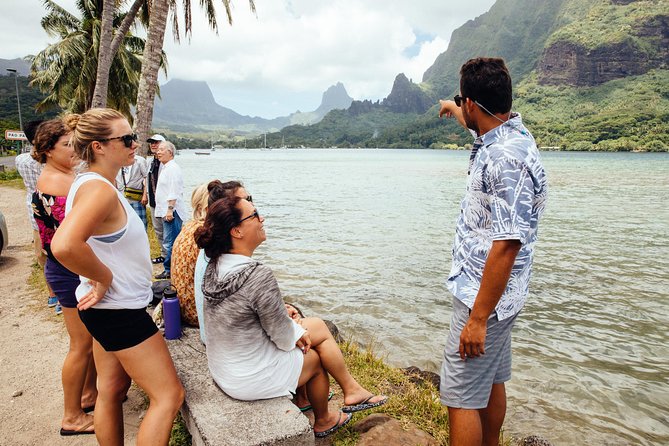
The setting matters, too. The tour includes several scenic stops around the north side of Moorea. These pauses are not presented as a separate major sightseeing program, but they break up the eating and help you see the island’s communities and views from the road.
Poisson cru and the island’s seafood traditions
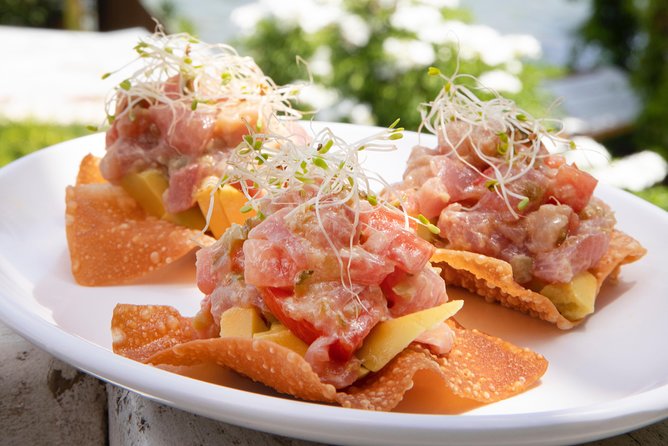
Poisson cru is one of the key dishes to watch for. In simple terms, it is raw fish prepared in a style associated with Tahiti and French Polynesia, often paired with coconut-based flavors. The tour uses it to show how local seafood and tropical ingredients work together.
This is the kind of tasting that benefits from a guide’s explanation. You learn not only what is on the plate, but also why fish plays such a central role in island cooking. The guide can also explain how French and Polynesian habits meet in the dish.
Food availability can vary, so the tour does not promise every item at every departure. Still, fish dishes are part of the advertised range, and past menus included fresh fish among the stops.
If you do not eat seafood, you should ask before paying. There is no guarantee that a full alternative menu will be available, particularly because the food scene on Moorea has limited choices for some diets.
Same lagoon, a completely different day on the water:
- 5 Hours Tahiti Island Tour – West and East Coast
★ 5.0 · 1,020 reviews - Unique Tahiti Tour – personalised, small group east coast tour
★ 4.5 · 314 reviews - Unique Tahiti Tour – personalised, small group west coast tour
★ 5.0 · 286 reviews - Aquablue Moorea
★ 5.0 · 262 reviews
Chow mein, ma’a tinito, and Chinese influence
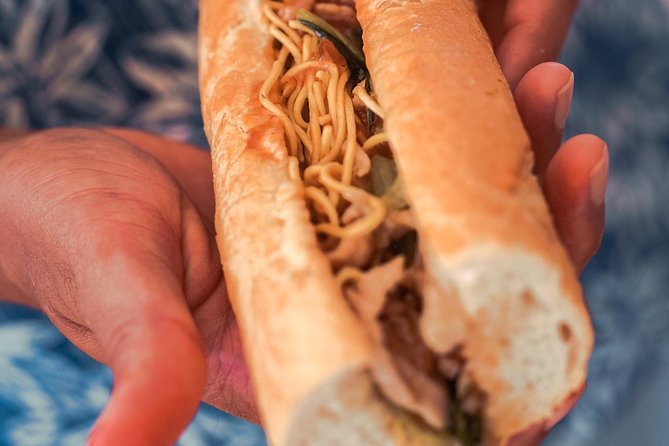
The tour’s food story becomes more interesting when Chinese influence enters the picture. Cause-croute chow mein and ma’a tinito are listed among the local favorites you may taste.
These dishes help explain why Moorean food is not a single, fixed tradition. Polynesian ingredients and French habits share space with Chinese cooking methods and flavors. A bowl or small serving of noodles may seem familiar, but the island context gives it a different place on the table.
I like that the tour includes these less obvious connections. A basic fruit tasting tells you about the climate. A local noodle dish tells you about people, movement, and the way recipes change when cultures meet.
The guide may also discuss the difference between food made for visitors and food selected by locals. That is useful when you later see a row of cafés or snack counters and need to decide where to stop. The point is not that one style is always better. It is that you understand what kind of meal you are ordering.
Pies, breads, and the French thread
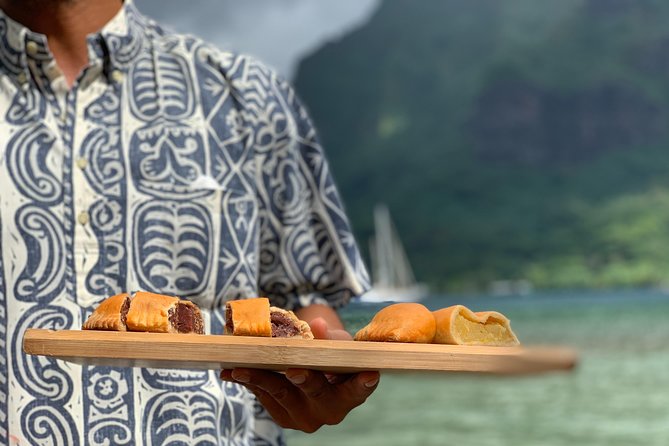
French influence shows up in the tour’s breads, fruit pies, and meat pies. These items add a bakery and pastry element to a menu otherwise centered on fruit, fish, nuts, and savory island dishes.
The pies are especially practical to sample because they can be easy meals later. Several stops may offer food you can buy in larger portions and take with you. One useful detail from the experience is that extra food from some snack shops can be purchased and kept in a cooler.
That makes the tour more than a sequence of bites. You are also learning what works for a picnic, a casual lunch, or a meal back at your accommodation. Ask the guide which stops are best for return visits, since the menu and hours may differ from one place to another.
Five to eight stops, with room for conversation
The tour is built around variety rather than one long meal. You may visit four different snack shops, or closer to seven or eight local businesses, depending on the day. The stops can include small cafés, stands, restaurants, and shops that you might pass without recognizing as important food spots.
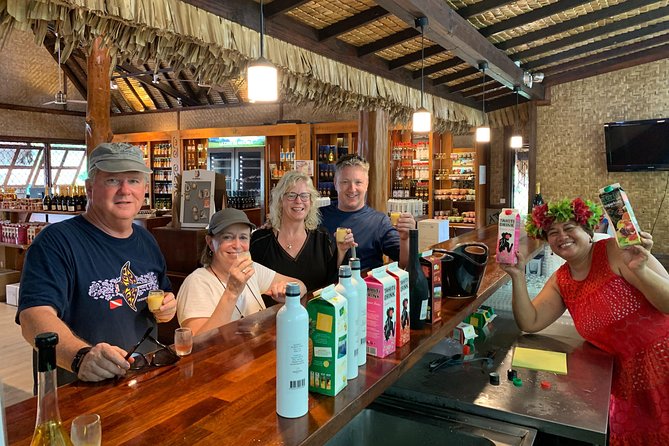
The small group helps here. With no more than eight people, the guide can explain each tasting and keep the pace social. Several participants described the group becoming friendly by the end, helped by the shared task of trying unfamiliar foods.
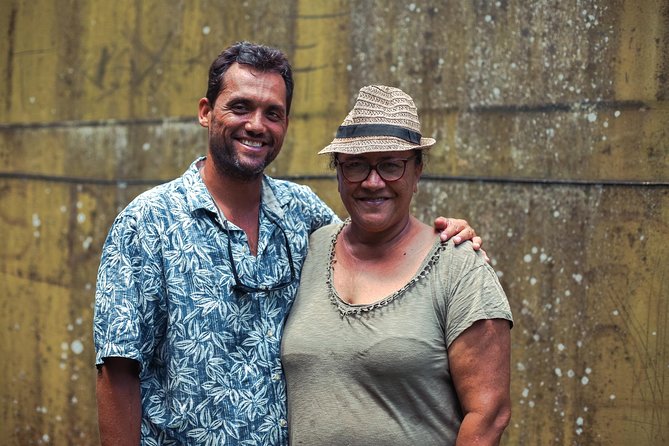
Heimata is a former chef and a Moorea native. His professional background adds useful detail to the tastings, while his local roots give the tour a personal angle. He has also cooked for the 2024 USA Olympic surfing team, an unusual detail that adds context to his culinary experience.
Mareva guides some outings. She is described as warm and well informed about food, politics, French culture, ecology, and island life. The guide may speak English and French, and the departure can be multilingual.
The conversation is a real part of the value. You can ask about ingredients, local customs, island communities, or how French Polynesia differs from France in Europe. If you prefer a silent, rapid food crawl, this may feel slower. If you enjoy connecting food to place, the pace is a strength.
Why booking early makes sense
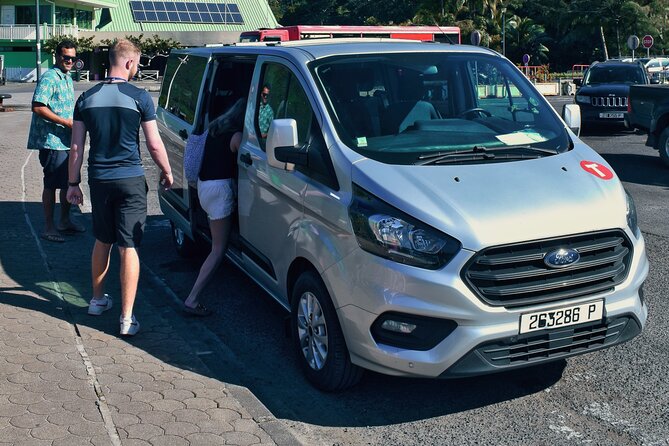
This is not a large bus tour. The group limit is eight people, and the most sought-after departures can fill before you arrive. Booking early also lets you schedule the experience near the beginning of your stay.
That timing has a practical payoff. If Heimata points out a favorite poke bowl shop, snack counter, or bakery, you still have time to return. You can also use the morning to decide where to eat for lunch and dinner during the rest of your visit.
Booking late may leave you with only the final full day on Moorea. That is still better than missing the tour, but it gives you little time to use the food recommendations. If your schedule is tight, check the pickup and port timing carefully.
Cruise passengers must provide the ship name, docking time, disembarkation time, and re-boarding time when booking. The tour can work well from the port, but you need enough time for the drive, stops, and return.
Is $73 a fair price?
At $73, the tour is priced as a half-day food and sightseeing outing rather than a simple breakfast. The fee includes the food tastings, bottled water, driver-guide, air-conditioned transport, taxes, and hotel drop-off. Pickup is included from selected hotels and areas.
The value improves if you would otherwise pay for several separate meals and taxis. You also get access to local places that can be hard to identify on your own, plus the guide’s advice about what to order later.
The price is less attractive if you mainly want a large sit-down meal. Tastings are samples, not a guaranteed full lunch, although the number of bites can be substantial. You may also want to bring money for extra food, drinks, or shopping at some stops.
There is conflicting information about alcohol. The overview refers to some alcoholic drinks, but the detailed inclusions exclude beer, wine, and spirits, and one food-focused description specifically notes that alcohol is not provided. I would budget as if alcohol is not included and ask the operator to confirm before departure.
Soda, coffee, and tea are also excluded. Bottled water is included, but bringing extra water is sensible, especially in warm weather.
Dietary limits you should take seriously
This is not a strong choice for strict vegetarians, vegans, or people who need gluten-free food. The operator says choices are limited and that accommodations will be attempted, but cannot be guaranteed.
Tell the operator about allergies and dietary needs when you book. Do not assume that a tasting can simply be swapped for another dish at each stop. The tour is designed around the food available from local vendors that day.
Children under 12 are allowed only on private tours. The minimum drinking age is 18, although alcoholic drinks should be confirmed separately because of the conflicting information.
Most people can participate, and the tour requires little walking. Casual shoes or flip-flops are fine. The dress code is deliberately relaxed, so this is one outing where you do not need to dress for a formal restaurant.
Rain, timing, and the practical details
The experience requires good weather. If poor conditions cancel it, you are offered another date or a full refund. The tour also needs a minimum number of participants, so a cancellation for that reason brings the same choice of a new date, another experience, or a refund.
Free cancellation applies when you cancel at least 24 hours before the local start time. Inside that window, you do not receive a refund, and changes are not accepted.
The four-hour estimate can stretch closer to five hours. A typical schedule begins with pickup around 8:30 a.m. and may finish around 1:30 p.m. Plan your afternoon with a little space rather than booking a tight activity immediately afterward.
Because most of the tour takes place in the vehicle, you should be comfortable with repeated short stops and road time. The reward is coverage: you see more of northern Moorea than you would on foot and sample food across several communities.
Who should book the Moorea Street Food Tour?
I would book this for anyone who wants a useful introduction to Moorea’s food and plans to eat outside the resort. It suits couples, small groups, solo visitors who enjoy conversation, and families with children over 12 on a private tour.
It is also a smart first or second day activity. You get a broad sample, learn the food names, and leave with ideas for later meals. Food lovers will appreciate the range, while culture-minded visitors will value the stories about French, Chinese, and Polynesian influences.
I would skip it if you need strict control over every ingredient, dislike seafood, or want a long, leisurely meal at one restaurant. The menu changes, the tastings are not designed for every diet, and the morning includes a fair amount of driving.
The tour earns its strong reputation through three things: a personal guide, many small tastes, and access to everyday food spots. It is not a luxury dining event. It is a practical way to get beyond the resort and understand Moorea through what people cook, sell, and eat.
Should you book it?
Yes, if you want local food, island context, and an easy way to cover the north side of Moorea in one morning. Book early, schedule it near the start of your stay, and arrive ready to try unfamiliar dishes.
Before confirming, check the pickup area, dietary possibilities, exact food list, and alcohol policy. If those points work for you, $73 is a sensible price for transport, a small group, a native guide, and enough tastings to shape the rest of your meals on the island.
FAQ
Where does the Moorea Street Food Tour take place?
The tour takes place on Moorea, with most of the route covering the north side of the island. It visits local vendors, snack shops, stands, cafés, and small businesses, with some sightseeing stops along the way.
What time does the tour begin?
The listed start time is 8:30 a.m. Hotel pickups generally begin between 8:00 and 8:30 a.m., and the first food stop is expected around 9:15 a.m.
How long does the experience last?
The tour lasts about four hours, though the detailed information allows four to five hours from pickup to return. One stated schedule ran from about 8:30 a.m. until 1:30 p.m.
How many food tastings are included?
The tour includes approximately six to eight food-tasting stops. The number of individual bites can be higher, with some outings including about 13 to 15 tastes.
What foods might I try?
Possible tastings include seasonal fruit, fresh pineapple, poisson cru, chow mein, ma’a tinito, mape nuts, breads, fruit pies, meat pies, coconut, and other local snacks. The exact selection can vary.
Is hotel pickup included?
Pickup is included from selected hotels and nearby accommodations, including the Hilton, Manava, Sofitel, Kaveka Hotel, and Eimeo Lodge. Transport may be arranged for accommodations outside the stated pickup area.
Can cruise ship passengers join the tour?
Yes. Port pickup and drop-off are included, but cruise passengers must provide their ship name, docking time, disembarkation time, and re-boarding time when booking.
Are vegetarian, vegan, or gluten-free options available?
They are not guaranteed. The operator says choices are limited and will try to accommodate dietary needs, so you should provide details about allergies or restrictions when booking.
Is alcohol included in the price?
The information is inconsistent. One description refers to some alcoholic drinks, but the detailed inclusions exclude beer, wine, and spirits. Confirm with the operator, and do not assume alcohol is included.
Just added around Papeete
- Private Tour of Tahiti’s East Coast 3hours★ 5.0 · 4 reviews
- Tahiti: Full Day Tour with Taxi Boat (Teahupoo. OJ 2024)★ 5.0 · 14 reviews
- Tahiti: Full Day Tour with Private Flight EN Cessna (Moorea & Tahiti)★ 3.5 · 3 reviews
- Private Transfer: Hotel or Cruise Port to Tahiti Airport★ 4.0 · 14 reviews
- Shared 2 Hour Papeete Walking Tour★ 5.0 · 13 reviews
- Private : Tahiti Museum & Circle Island Tour, Afternoon Tour (5h)★ 4.0 · 6 reviews
- Papeete City Tour, 3hours (on Tahiti)★ 5.0 · 3 reviews
- Private 2 Hour Walking Tour in Papeete★ 5.0 · 8 reviews
Food & Drink, compared.
Browse the lists this tour appears in