
Reviewed · GUIDED
Moorea : Safari Nature and Culture Tour with local guide
Moorea’s most unusual cultural experience is its virtual reality archaeology. At the Opunohu site, you put on a headset and see a 17th-century marae ceremony and naval battle reconstructed with support from French Polynesia’s Department of Culture. It is a clever way to make old stones and earthworks easier to understand.
I like the compact route, which packs bays, forest, pineapple fields, temples, and a distillery into four hours. I also like the small group size, limited to eight, and the local touch from guide Christine, whose personal connection to Moorea gives the stories warmth. The main caution is the pace: this is a busy half-day, with several short stops and walks, and it is not suitable for people with mobility limits, back problems, or very young children.
In This Review
- Key points at a glance
- Why the VR archaeology is the star
- Toatea Lookout starts the morning with a wide view
- Cook’s Bay connects geography with exploration
- Opunohu Bay and the road into the interior
- Pineapple fields, crops, and a taste of Moorea
- The ancient village and marae site
- Belvedere Lookout frames Moorea’s two bays
- Missionaries, temples, and a changing Moorea
- A relaxed finish at Rotui Juice Factory and Distillery
- What $117 means in practical terms
- The guide makes the difference
- Who should book this tour
- Final verdict: book it for culture with your scenery
- FAQ
- How long is the Moorea Safari Nature and Culture Tour?
- What languages does the guide speak?
- Who is the guide?
- Is the virtual reality equipment included?
- Is food included?
- What should I bring?
Key points at a glance
- VR at an ancient archaeological site: See a marae ceremony and naval battle as reconstructed scenes rather than trying to picture them from ruins alone.
- Christine’s local storytelling: Expect clear explanations about Moorea, Polynesian customs, plants, missionaries, myths, and legends.
- A full island sampler: The route links Toatea, Cook’s Bay, Opunohu Bay, the interior crater, Belvedere, temples, and a distillery.
- Pineapple country and local produce: Stop for a tasting among Moorea’s agricultural areas, with mountain views and crops grown on the island.
- Small-group transport included: Hotel pickup and drop-off keep the outing simple, while a group of up to eight allows room for questions.
- A four-hour cultural tour, not a beach day: You will see and learn a lot, but you will not have time for long walks, swimming, or a leisurely meal.
Why the VR archaeology is the star
Most island tours give you a viewpoint, a few facts, and a photo stop. This one tries to answer the harder question: what did Moorea look and feel like before modern tourism?
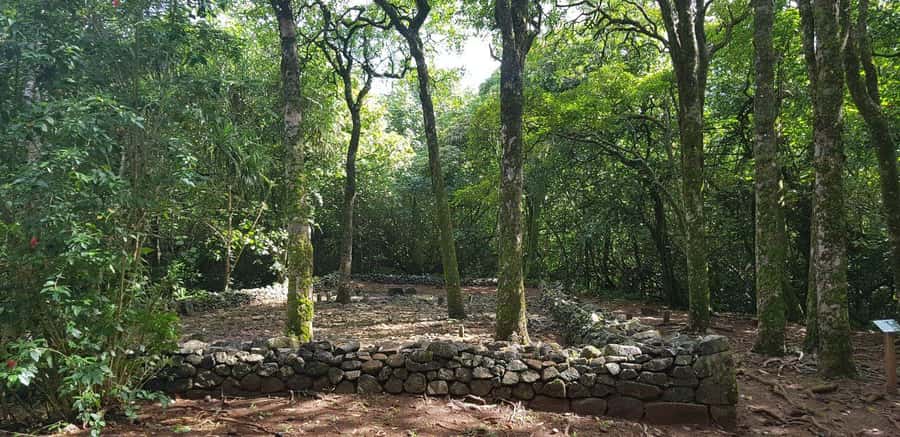
The virtual reality portion takes place at the famous Opunohu archaeological site. With the headset on, you can view reconstructions connected to the first Polynesians, including a ceremony at a marae and a naval battle in the bay. The technology does not replace the physical site. It gives the site a setting and purpose.
That matters because archaeological remains can be difficult to read. A platform, stone wall, or open patch of ground may mean little until you understand how people used it. The VR scenes help turn the site into a place of ceremony, power, and community.
The equipment is provided on site, so you do not need to bring anything special. You should still bring comfortable shoes, water, and insect repellent. The tour includes a walk through the area, and tropical forest conditions can make sturdy footwear more useful than sandals.
The VR feature is also a good reason to choose this tour over a standard island drive. If you mainly want to photograph Moorea’s bays, several other outings can do that. If you want the views plus a stronger sense of the island’s past, this tour offers something more distinctive.
A few more Moorea trips to weigh up
- Moorea: Half-Day Open-Air 4WD Safari with Hotel Transfers
★ 4.6 · 240 reviews - ALBERT TOURS: Excursion 4×4 safari with private SWING view point
★ 4.5 · 138 reviews - TOUR Safari 4X4
★ 4.5 · 37 reviews
Toatea Lookout starts the morning with a wide view
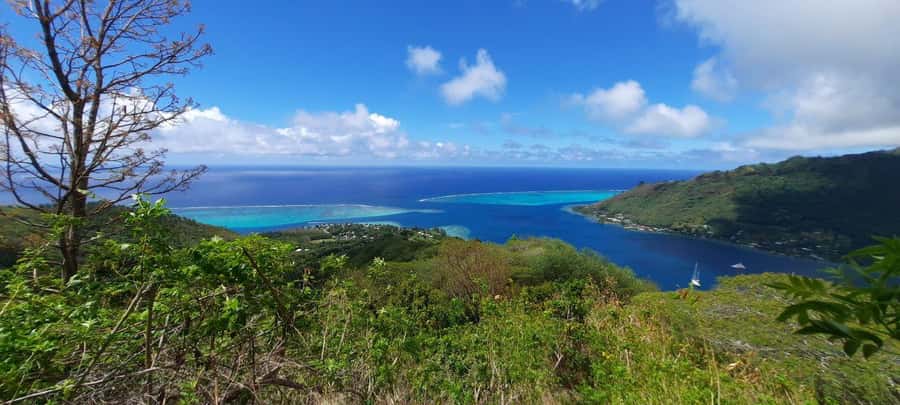
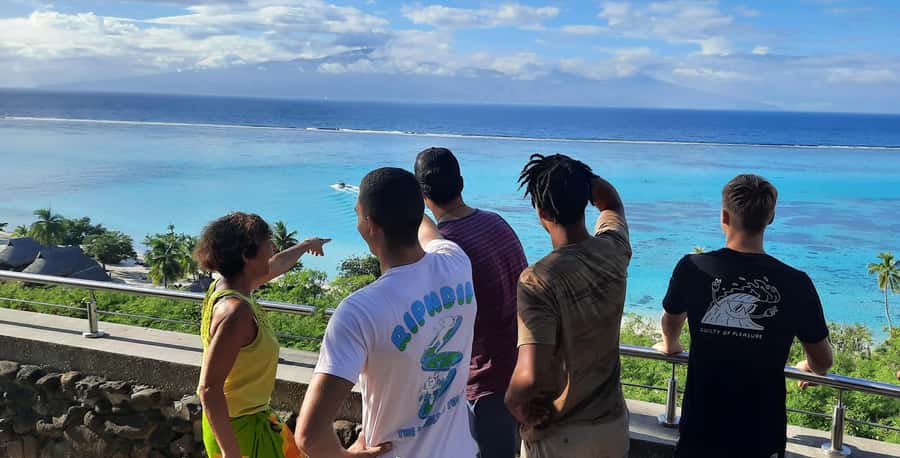
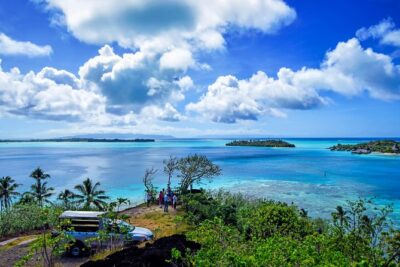
The first stop is Toatea Lookout, with about 20 minutes for photos. It is a quick way to get your bearings, with a view toward Moorea’s coral reef and surrounding coast.
Do not expect a long visit here. The stop is designed for orientation and pictures, not for a full lesson or a long walk. Have your camera ready when you arrive so you can use the time well.
I like this as a first stop because it gives the rest of the tour a visual frame. Later, when Christine talks about the bays, mountains, and early sea routes, you will already have seen Moorea from above and near the coast.
Cook’s Bay connects geography with exploration
At Cook’s Bay, the guided visit lasts about 25 minutes. The focus is on the first navigators who discovered Tahiti and Moorea, bringing the island’s setting into the story of Pacific exploration.
The bay is not just a pretty pause. It helps explain why Moorea’s coastline has mattered for travel, settlement, and contact with the outside world. You will hear about the early navigators and the part Tahiti and Moorea played in their journeys.
This stop is relatively short, so expect a concise explanation rather than a long historical lecture. That is typical of the tour: the guide keeps moving, but the route gives you several different ways to understand the island.
Opunohu Bay and the road into the interior
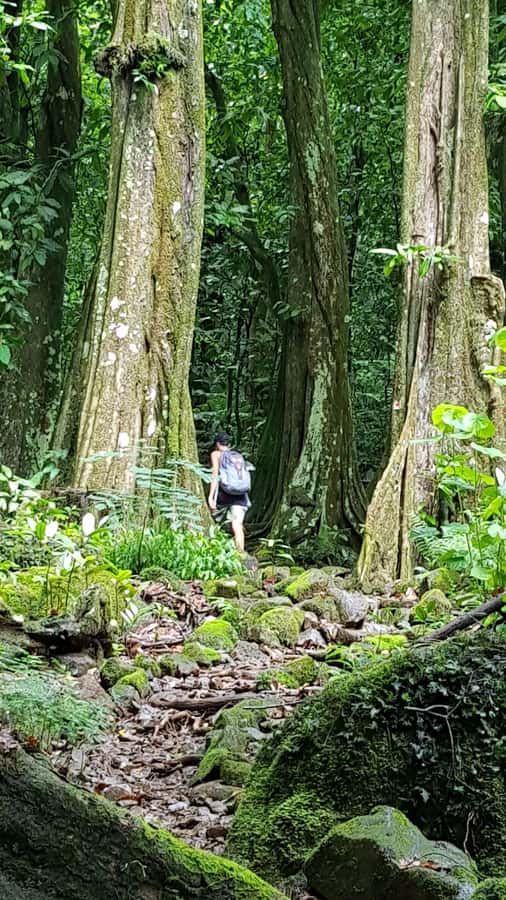
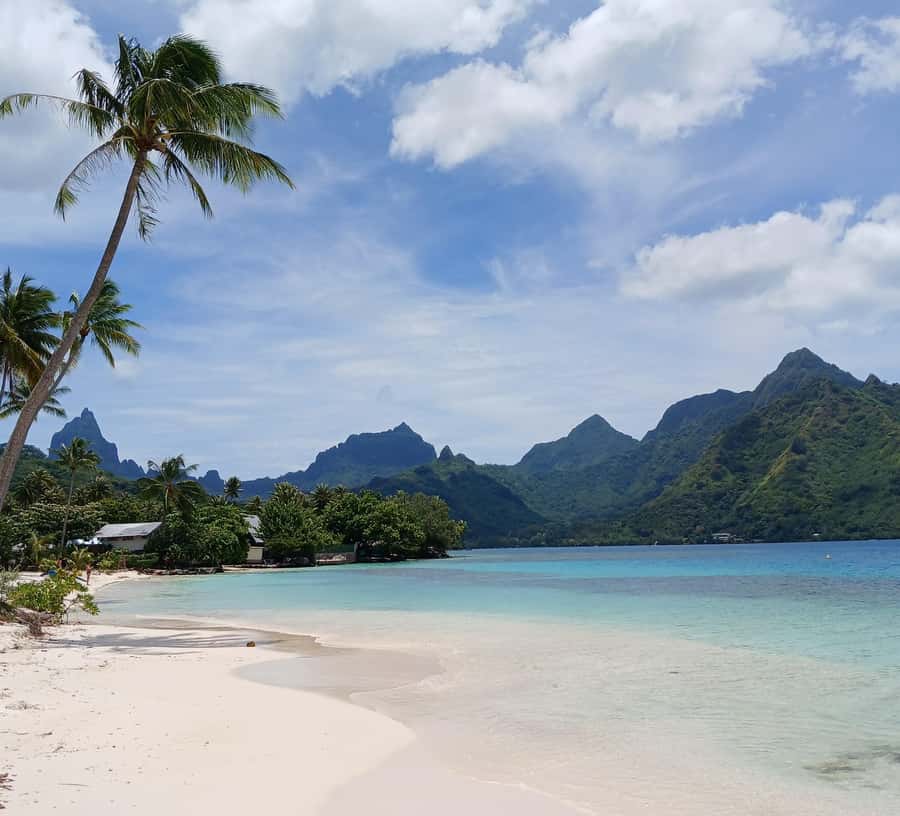
The tour then passes through Opunohu Bay, with time for photographs and more guided commentary. From here, the road heads through tropical forest and across a river toward the center of the island’s crater.
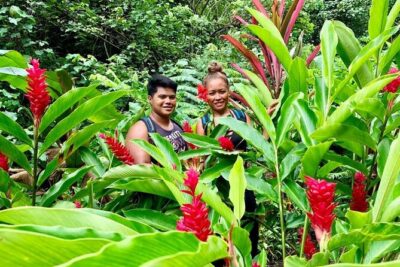
This is one of the most scenic parts of the drive. You will see changing views on the way, with forest, steep mountain slopes, and agricultural areas appearing as the route moves inland. The scenery is a major part of the appeal, but Christine also points out plant species and explains their uses.
The itinerary allows around 35 minutes for the scenic drive, views, and welcome refreshments. That time is useful because the interior is not simply a transfer between attractions. It is where Moorea’s natural setting and food-growing traditions meet.
Same lagoon, a completely different day on the water:
- Moorea 6-Hour Snorkeling and Lunch Shared Tour
★ 5.0 · 1,758 reviews - Moorea 4WD Tour Inc. Belvedere, Pineapple Farm, Magic Mountain…
★ 5.0 · 967 reviews - Snorkeling excursion, discovery of the lagoon, small group.
★ 5.0 · 861 reviews - Franckyfranck Tours Moorea – Half day Tours
★ 5.0 · 817 reviews
Pineapple fields, crops, and a taste of Moorea
In the crater area, you get a view toward pineapple fields and local agricultural land. There is a tasting session, with fruit and juice included in the tour.
One especially worthwhile part is the chance to see an agricultural school and the variety of crops grown with the dramatic Bali Hai backdrop. You can also learn how plant products have been used through the years. This gives the tour a practical side that many scenic drives miss.
The fruit and juice tasting is not a meal. The half-day tour does not include food, so you should eat beforehand or plan another meal afterward. The included refreshments offer a sample of local produce, but they will not replace lunch.
I would pay attention during this section even if you are mainly interested in archaeology. Food plants and useful plants are part of cultural life, and this stop helps connect Moorea’s past with the island you see today.
The ancient village and marae site
The walk at the archaeological area lasts about 45 minutes, making it one of the most substantial stops. Here you step back from lookout photography and spend time with the remains of an ancient village and marae.
The marae was an important ceremonial place in Polynesian society. The exact details you take away will depend on the guide’s explanation and your questions, but the tour is built around showing how the site relates to early Polynesian life.
Christine is the key to this part of the morning. She explains Moorea’s traditions, myths, and legends in English or French, and the small group makes it easier to ask about details that catch your attention. Her presentation is especially useful for visitors who want more than a list of dates and names.
The walk also means you should be ready for uneven ground and outdoor conditions. The activity excludes wheelchair users and people with mobility impairments, and it is not recommended for people with back problems or pregnant women. The provider also sets age restrictions, excluding children under five, babies under one, and people over 70 or 80 as listed in the activity information. Because those upper-age limits are inconsistent, confirm the current rule before booking if it applies to you.
Belvedere Lookout frames Moorea’s two bays
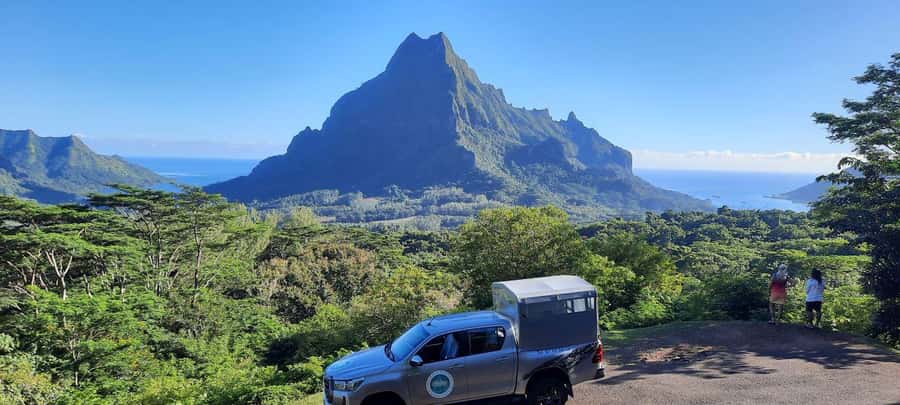
The Belvedere stop lasts about 15 minutes. From here, you can admire the panorama of Moorea’s two bays, with the island’s mountains and interior spread below.
This is another short photo stop, but it earns its place. After seeing the coast from Toatea and driving through the forest, the Belvedere gives you a broad view that ties the route together.
Bring a camera, but do not let the photo stop crowd out the explanation. The value here is not only the picture. It is seeing how the bays, crater, roads, and cultivated areas fit into one compact island.
Missionaries, temples, and a changing Moorea
The tour also covers the arrival of the first Protestant and Catholic missionaries in the early 19th century. You visit temples and learn how missionary history affected Moorea.
This part adds balance to the tour. The focus is not only on ancient Polynesia or early navigators. You also hear about a major period of change, when new religious ideas and institutions arrived on the island.
The schedule includes about 20 minutes for a guided walk connected with this section. That is enough for an introduction, though not enough for a full study of every church or religious site. If missionary history is your main interest, you may want to ask Christine questions while you have her attention.
The stories of myths and legends add another layer. They give you a sense of how people have explained places, events, and the natural world, but you should treat them as cultural storytelling rather than as a substitute for archaeological evidence. A good guide can help you appreciate both.
A relaxed finish at Rotui Juice Factory and Distillery
The final major stop is Rotui Juice Factory and Distillery. You get a break, some shopping time, and a tasting that can include tropical fruit juices, punch, and local beer. The itinerary also identifies a champagne tasting, while the included features specifically promise fruit and juice tasting, so the exact drinks may vary.
This is a pleasant way to end a morning that has involved several walks and plenty of information. It gives you a chance to sit, sample local drinks, and decide if you want to buy something to take back.
The stop is not the same as a full meal or a formal food tour. Think of it as a tasting break. If you need lunch, arrange it separately after the hotel drop-off or before the tour, depending on your start time.
What $117 means in practical terms
At $117 per person, this is not the cheapest way to see Moorea. Its value depends on how you like to spend a half-day.
The price includes hotel pickup and drop-off, a live guide, transport between a wide range of sites, the VR headset, and fruit and juice tasting. You are paying for a guided cultural route rather than simply a scenic transfer. Reaching the bays, crater, archaeological site, Belvedere, temples, and distillery on your own would require more planning, and you would miss the guide’s explanations.
The group is limited to eight people, which improves the value. You are not lost in a large coach crowd, and you have a better chance to ask Christine about the plants, legends, or archaeological scenes. A private option is also available if you want more control over timing and attention, though the supplied price is for the listed experience and does not establish the private-tour cost.
I see the tour as good value for a first visit to Moorea, especially if you want the island’s culture to matter as much as its scenery. It is less compelling if you only want a beach, a long forest hike, or an unhurried food experience. The four-hour schedule is efficient, but efficiency always means some stops are brief.
The guide makes the difference
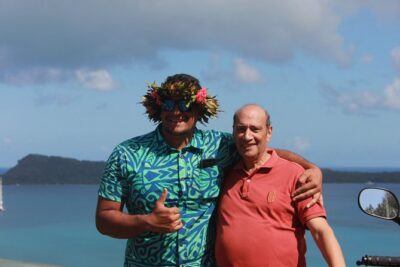
Christine receives especially strong praise for her warmth, patience, and ability to explain Moorea’s history and traditions. Her strength is not just reciting information. She presents the island as a place she cares about, which helps the cultural material feel personal rather than packaged.
You can expect English or French guiding. The tour works best when you ask questions, particularly during the agricultural and archaeological portions. The small group format should make that possible without holding up a large crowd.
Her explanations cover the island’s past, plant uses, myths, missionary period, and Polynesian customs. That range is impressive for four hours, though it also means the tour moves quickly from one subject to another.
Who should book this tour
I would choose this outing if you want a broad introduction to Moorea and prefer learning while you sightsee. It suits first-time visitors, couples, small families with older children, and anyone curious about Polynesian culture, archaeology, and local agriculture.
It is also a smart pick for a short stay. In four hours, you cover both bays, the interior, a major archaeological site, a high lookout, religious sites, and a tasting stop. Hotel pickup and drop-off remove much of the day’s logistics.
You should think twice if you want a slow pace. There are several stops, but most are measured in 15 to 25 minutes, with only the archaeological visit receiving about 45 minutes. The activity is also a poor fit for anyone who needs wheelchair access, has significant mobility limits, has back problems, is pregnant, or falls within the listed age restrictions.
Wear comfortable clothes and shoes. Carry water, insect repellent, and a camera. Since food is not included, do not treat the fruit tasting as lunch.
Final verdict: book it for culture with your scenery
Book this tour if you want Moorea’s views to come with context. The standout feature is the VR reconstruction at Opunohu, but the full appeal comes from the combination of Christine’s local storytelling, the ancient village, pineapple country, missionary sites, and the two-bay panorama from the Belvedere.
Skip it if your priority is swimming, a long hike, or a relaxed meal. For everyone else, $117 buys a well-organized four-hour introduction to Moorea, with transport, a small group, and a useful mix of natural and cultural stops. The tour is busiest when you count the minutes, but it gives you a lot to take home.
FAQ
How long is the Moorea Safari Nature and Culture Tour?
The tour lasts four hours, with pickup and drop-off in the Moorea-Maiao area.
What languages does the guide speak?
The live tour is available in English and French.
Who is the guide?
The guide identified in the supplied tour information and guest feedback is Christine.
Is the virtual reality equipment included?
Yes. A VR headset is provided on site for the archaeological reconstructions.
Is food included?
No. The half-day tour does not include food. Fruit and juice tasting is included, and the final tasting stop may also offer punch and local beer.
What should I bring?
Bring comfortable shoes, comfortable clothes, water, insect repellent, and a camera.
Just added around Moorea
- moorea tubing★ 5.0 · 12 reviews
- Whale Watching Moorea (non-swimming)★ 4.0 · 12 reviews
- Yoga at sunrise at Sofitel Moorea, overlooking Tahiti★ 5.0 · 3 reviews
- Snorkeling Tour in Moorea Aquatic Adventure Half Day★ 5.0 · 4 reviews
- Watch and Swim with Humpback Whales in Moorea★ 5.0 · 3 reviews
- Unique photo shoot in the heart DE Moorea: Beach & mountain combo★ 5.0 · 3 reviews
- Snorkeling Safari Moorea (Half Day Tour)★ 5.0 · 3 reviews
- Shared Transfer : Hotel to Moorea Airport (or) Pier★ 4.5 · 9 reviews
Guided, compared.
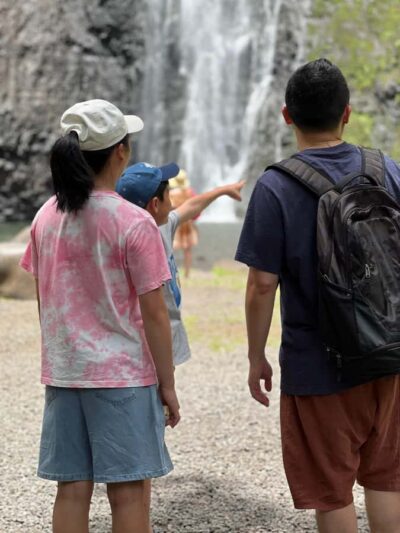
Unique East Coast Half Day Tour with Local Guide
Read our review →
Eco guided excursion to the lagoon of Moorea in transparent kayak 1/2 day morning
Read our review →
Guided Small Group Whale Watching and Swim Tour Tahiti
Read our review →
Guided tour of the island of Tahaa with Revanui Excursions
Read our review →Browse the lists this tour appears in